If your living room has a big window and a spot of afternoon sun, you've probably already seen the early signs: a cushion that looks a shade lighter than the rest, or a stripe across the armrest where the light hits every day. The good news is that most of the fixes are simple, cheap, and don't require rearranging your entire home around the windows.
This guide walks through why sunlight is so hard on upholstery, how to tell if your sofa is already at risk, and what actually works to protect a couch from fading — whether it's fabric, leather, or something in between.
How Sunlight Damages Sofa Upholstery

Sunlight damage to furniture comes from two things working together: UV rays and heat. UV light breaks down the dye molecules and fibers in upholstery over time, which is why colors fade unevenly — the parts getting direct light lose pigment faster than the shadow parts. Heat speeds this up and also dries out natural fibers and leather, making them stiffer and more prone to cracking.
It's not just about color, either. Fading is the most visible problem, but repeated UV and heat exposure also weakens fabric fibers and leather finishes, which shortens the life of the sofa itself.
Here's how different materials typically hold up:
| Empty Space | ||
|---|---|---|
|
Material |
Possible Damage |
Risk Level |
|
Cotton/linen fabric |
Fading, thinning fibers, discoloration |
High |
|
Polyester/microfiber blends |
Fading, some fiber breakdown over years |
Medium |
|
Performance/fade-resistant fabric |
Slower fading, minimal fiber damage |
Low |
|
Genuine leather |
Fading, drying, cracking, stiffness |
High |
|
Faux leather (PU/PVC) |
Fading, peeling, brittleness |
Medium-High |
|
Velvet |
Fading, flattening of the pile, sheen loss |
High |
Genuine leather and natural-fiber fabrics tend to react the most visibly, while tightly woven synthetic and performance fabrics tend to resist fading longer, though "resist" doesn't mean immune.
How to Check If Your Sofa Is at Risk

You don't need special equipment to figure out if your couch fading in sunlight is already underway or likely to start. A few things to look for:
-
Direct sun for more than 2-3 hours a day. If a window lets in unfiltered light for a chunk of the afternoon, that section of the sofa is absorbing far more UV than the rest of the room.
-
South- or west-facing windows. These get the strongest, most direct light in most climates, especially in the late afternoon.
-
Color difference under cushions. Lift a seat cushion or move a throw pillow that's been sitting in the same spot for months. If the fabric underneath looks noticeably richer or darker, the exposed area has already started to fade.
-
Warm or hot fabric to the touch. If the upholstery feels warm even when the room isn't, that section is absorbing more heat than the rest — a sign the sun is hitting it directly for extended periods.
-
Stiffness or dryness on leather. Run a hand over the leather near a sunny window versus a shaded part of the same piece. If the sunny section feels drier or less supple, that's early sun damage.
If two or more of these apply, it's worth taking action now rather than waiting for the fading to become obvious.
Best Ways to Protect a Sofa From Sunlight

Once you know a sofa is at risk, the actual work of how to protect a sofa from sun damage comes down to a handful of methods — none of which require a full room redesign. Most people combine two or three of them depending on how much light comes through and how flexible their layout is.
Protect Furniture with Curtains, Blinds or UV Window Film
This is the first line of defense because it protects a couch from UV rays before they ever reach the fabric. Blinds for sunny living rooms give you control over how much light comes through at different times of day, while heavier curtains block more light overall but require you to actually close them — which, in practice, a lot of people forget to do.
UV-filtering window film is a good middle ground. It's applied directly to the glass, blocks a large percentage of UV rays, and still lets in natural light without the room going dark. It's a one-time install and works in the background without changing your daily routine.
For anyone who wants the room to stay bright, film plus sheer curtains is often the most livable combination — the sheers cut a bit of direct glare while the film handles the actual UV filtering.
Change the Sofa Placement
Sometimes the simplest fix is moving the sofa a few feet, or angling it so the sun hits the back or side rather than the seating and cushions face-on. If a full rearrange isn't practical, even shifting it away from a west-facing window by a foot or two can meaningfully cut down on direct exposure during peak sun hours.
This is worth doing before investing in anything else, since no cover or fabric treatment fully offsets years of direct, unfiltered sun exposure on the same spot.
Use a Removable Sofa Cover
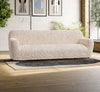
A cover adds a physical, replaceable layer that protects upholstery from UV rays. Instead of the sofa's original fabric taking the damage, the cover does. And using furniture covers for bright rooms is far easier and cheaper to replace than reupholstering a whole piece. This is especially useful for sofas that see a lot of light or that already show some fading, since a well-fitted cover also hides uneven color underneath while it protects what's left.
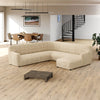
For sectionals, fit matters more than it does on a standard sofa, since there are more seams, corners, and cushion sections to account for. Sectional sofa covers built specifically for L-shaped and U-shaped layouts stay in place better and protect every section evenly, rather than leaving gaps where a generic cover doesn't quite reach.
Rotate Sofa Cushions and Throws
This one costs nothing. Flip and rotate seat cushions every few weeks so the same section isn't always facing the window. If your cushions are reversible, alternate sides. Move throw pillows and blankets around instead of leaving them in the same spot for months, since fabric under a pillow that never moves will end up a visibly different shade from the exposed fabric around it.
It won't stop fading, but it spreads the exposure evenly, so you get gradual, uniform aging instead of one obvious faded patch.
How to Protect Different Sofa Materials

Fabric and leather age differently under sun exposure, so the right approach depends on what your sofa is actually made of.
Fabric Sofas
Prevent sofa fabric from fading by combining window protection with material choice. If you're shopping for a new sofa or a replacement cover, tightly woven, solution-dyed fabrics tend to hold color longer than loosely woven or piece-dyed ones, since the color is part of the fiber itself rather than a surface treatment. Fade-resistant upholstery is worth the extra cost if the piece will sit anywhere near a bright window.
For existing furniture, vacuum regularly to remove dust, which can make fibers more abrasive and prone to wear when combined with heat. Avoid combining direct sun with high humidity, since some fabrics discolor faster when heat and moisture hit at the same time.
Leather Sofas
Leather sofa sun damage shows up as fading first, then dryness, then cracking if nothing changes. Leather needs conditioning every few months, more often if it sits near a sunny spot, to replace the natural oils that heat and UV exposure strip away. A leather conditioner made for upholstery (not shoe polish or generic oils) keeps the material flexible and slows down surface cracking.
Beyond conditioning, the same rules apply as with fabric: keep direct sun off it when possible, and consider a cover for the sections that get hit hardest, especially the arms and top of the backrest, which tend to take the most exposure over a day.
What to Do With an Already Sun-Faded Sofa

If the damage is already done, you've got a few realistic options depending on how bad it is and what you're willing to spend.
Hide Minor Fading
For light, uneven fading, a throw blanket draped strategically or a rearranged set of pillows can mask the worst of it. This isn't a fix, but it buys time if you're not ready to replace or recover the piece yet, and it keeps the fading from getting worse if you also move the sofa or add window protection.
Use a Sofa Cover
A full cover is the most practical fix for a sun-faded couch that's otherwise still in good shape structurally. It hides the discoloration completely, protects against further fading, and costs a fraction of reupholstering. This is usually the first thing worth trying before anything more permanent, since it solves both the appearance problem and prevents uneven couch fading from spreading to the rest of the piece.
Consider Recoloring or Reupholstery
For leather, professional recoloring can restore an even tone across the whole piece, though it works best when the leather itself isn't cracked or brittle yet. For fabric sofas with significant fading or fiber damage, reupholstering is the more permanent route — it's a bigger investment, but it also gives you the chance to switch to a more fade-resistant fabric so the same problem doesn't repeat in a few years.
Common Sun-Protection Mistakes
A few habits make sun damage worse without people realizing it:
-
Leaving blinds open "for the view" during peak sun hours. Even a few hours a day, every day, adds up over a year.
-
Assuming synthetic fabric is immune to fading. It fades more slowly than natural fiber in most cases, but it still fades.
-
Only covering the seat cushions. Armrests and the top of the backrest often take just as much exposure and fade at different rates if ignored.
-
Skipping leather conditioning because the couch "looks fine." By the time cracking is visible, the leather has already lost a lot of its flexibility.
-
Never rotating cushions. This is the easiest fix on this entire list, and it's the one most people skip.
-
Waiting until fading is obvious to do anything. Prevention is far cheaper and easier than restoration.
FAQ
How to restore faded upholstery to its original color?
Fabric dye that's broken down by UV exposure can't be reversed the way leather can be recolored. A cover is usually the more realistic fix for fabric, while professional dyeing can help leather.
Do UV window films actually work to protect furniture from sunlight?
Yes. Quality UV-filtering window film blocks a significant portion of the UV rays that cause fading, while still letting visible light through. It's one of the most effective passive protection methods since it doesn't require you to change any daily habits.
Is leather or fabric more likely to fade in sunlight?
Both fade, but they show it differently. Leather tends to fade and dry out, eventually cracking if untreated. Fabric fades in color first and may thin out over time. Neither holds up well to years of unfiltered direct sun.
What's the cheapest way to keep a couch from fading?
Rearranging the sofa and rotating cushions cost nothing and help immediately. After that, a sofa cover is usually the most affordable physical protection, followed by curtains or blinds, with UV window film as a slightly bigger one-time investment.