You've spent time picking out furniture, rearranging things more than once, maybe even repainted a wall — and something still feels off. You're not alone. The living room is the hardest space in the house to get right, and most of the time, the problem isn't budget or taste. It's a handful of very common, very fixable mistakes.
Here's what usually goes wrong and what to do instead.
Choosing Furniture That Doesn't Fit the Room

This is probably the most widespread of all living room design mistakes, and it goes both ways. Furniture that's too large makes a room feel cramped and hard to move through. Furniture that's too small looks lost, like it's floating in the middle of the space with nothing grounding it.
The most common culprits: sofas pushed flat against every wall (which actually makes a room feel smaller, not bigger), coffee tables that are either too far to reach comfortably or so close you bruise your shins, and rugs that are way too small for the seating area. A general rule for rugs: at least the front legs of every sofa and chair should sit on it. If the rug only fits under the coffee table, it's too small.
Before buying anything, measure your room and mark out furniture footprints with painter's tape on the floor. It takes ten minutes and saves a lot of expensive regret. And if you're working with a tricky space, these 10x10 room design ideas are worth a look — the principles apply well beyond small rooms.
Furniture placement tip: Pull seating away from the walls slightly and arrange it around a focal point — a fireplace, a piece of art, or a low media unit.
Ignoring Functionality in Everyday Living Spaces

A space can look stunning in photos and be genuinely uncomfortable to live in. That's a design failure, even if the aesthetics are flawless.
Functional living spaces are designed around what actually happens in them. Do you watch TV every evening? Work from the sofa sometimes? Have kids or pets who use the room constantly? The furniture, layout, and materials should all answer those questions — not ignore them.
A comfortable living room layout keeps traffic flow in mind: you should be able to walk through the room without squeezing past furniture. Seating should face each other, not just the screen. Storage should be built into the design, not added as an afterthought when things start piling up.
If you have a family-friendly living room in mind, durability matters as much as aesthetics. Choosing beautiful pieces that can't withstand real life just means you'll spend your time protecting them instead of enjoying the space.
Using the Wrong Colors and Textures

Color is where a lot of people either play it too safe or go too bold in the wrong places — both are common living room design mistakes.
Playing it too safe usually means an all-neutral room that feels flat and a little bland. Everything matches, nothing stands out, and the result is more hotel lobby than home. A room needs contrast — different tones, different textures, something with visual weight.
Going too bold in the wrong place means painting all four walls a deep, dramatic color in a room that doesn't get much natural light, or mixing patterns without a unifying thread. The fix isn't to avoid color — it's to use it deliberately. Pick one hero element (a wall, a sofa, a large rug) and build the palette around it.
Texture matters just as much as color. A room with all smooth, flat surfaces — glass, lacquer, flat-painted walls — tends to feel cold. Mixing in something tactile, whether that's a linen throw, a woven rug, or a velvet cushion, adds warmth without changing the color scheme at all.
For a look at what's actually working for modern homes right now, these 2026 living room design trends are a good reference point.
Overlooking Furniture Protection

One of the living room design mistakes is spending weeks choosing the right sofa and about five minutes thinking about how to keep it looking good.
Sofas are usually the biggest investment, and they take the most daily wear — spills, pet hair, kids, and sunlight fading the fabric over time. Most people either live in quiet anxiety about their furniture or resign themselves to it looking worn within a couple of years.
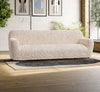
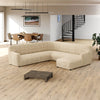
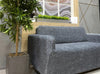
The smarter move is to build protection into the design from the start. Durable and stylish couch covers have come a long way. They look like fitted upholstery, not like you've thrown a sheet over the sofa. If you have pets or young children, a well-fitted, pet-friendly cover is one of the best sofa protection ideas you can invest in. It keeps the furniture underneath in good condition and is far cheaper than reupholstering or replacing.
Pet-friendly home design isn't the opposite of beautiful design — they're just design that accounts for real life. A sofa that's covered and protected will look better in three years than one that isn't.
Poor Lighting Choices

Lighting is the element that does the most work in a room and gets the least attention during decorating. Most living room decorating mistakes around lighting come down to one thing: relying entirely on a single overhead light.
One ceiling fixture in the center of the room creates flat, even light that's functional but dull. It doesn't create atmosphere, it doesn't highlight anything, and it tends to make people look slightly washed out. Good lighting has at least three layers: an ambient source (ceiling or floor), task lighting (a reading lamp, a desk light if needed), and something accent-level — a table lamp, a lit shelf, a piece of wall lighting.
Warm bulbs (around 2700–3000K) make a space feel welcoming. Cool white light (4000K and above) is fine for a home office but feels harsh in a space meant for relaxing. If you haven't thought about bulb temperature before, it's one of the cheapest, highest-impact changes you can make.
Cluttering the Living Room

There's a difference between a room that feels full of life and one that just feels full. Living room organization is what keeps that line clear.
Clutter usually accumulates gradually — a few extra cushions, stacks of magazines, things that don't have a home, so they land on every flat surface. Individually, none of it is a problem. Together, it overwhelms the space and make it feel harder to relax in.
The fix isn't to strip everything back to minimalism if that's not your style. It's to be intentional: every object should either be useful or genuinely beautiful to you. Living room makeover ideas that don't involve spending anything often start with a good edit — removing things rather than adding them.
For display items, the rule of odd numbers holds up well: groups of three or five tend to look more natural than even-numbered arrangements. And leaving some negative space — a shelf that isn't full, a corner that isn't filled — gives the eye somewhere to rest.
Home decorating tip for clutter: build storage into furniture choices from the start. Ottomans with storage inside, coffee tables with a lower shelf, media units with closed doors — these let you keep the room tidy without everything being invisible.
FAQ
What are the most common living room layout mistakes?
Pushing all the furniture against the walls, choosing a rug that's too small for the seating area, and arranging everything around the TV instead of creating a layout that actually encourages conversation. Scale and proportion fix most of it.
Can I fix a living room that feels off?
Of course. Start with the layout before buying anything new. Pull seating slightly away from the walls, check that the rug is large enough, and add a second or third light source. These three changes fix most rooms without spending much.
How can I make my living room more practical without sacrificing style?
Think about what actually happens in the room daily and design for that. Choose durable, easy-care fabrics, build storage into furniture choices, and use covers or protective solutions on pieces that get the most use. Good practical interior design doesn't look practical — it just works.
What are the biggest interior design mistakes people make with color?
Going all-neutral without any contrast, or painting a dark color in a room without enough natural light. Choose one bold element and build around it, and don't underestimate how much texture contributes to warmth.
Is it worth using sofa covers in a designed space?
Absolutely, especially in homes with kids or pets. Modern fitted covers can look seamless and keep your furniture in far better condition over time. It's one of the most underrated living room design tips there is.